
Artificial intelligence (AI) has become a major driver of transformation for businesses and workers around the world.
In Belgium, AI adoption is progressing, but it is accompanied by challenges related to trust, training, and regulation. This article explores the key statistics and trends shaping the AI landscape in Belgium.
1. AI adoption and use in Belgian businesses
Overall adoption rate
- Only one third of Belgian workers who use a computer for at least one hour a day regularly use generative AI applications such as ChatGPT (PwC Belgium, May 2025).
- 40% of workers do not use any AI tools (PwC Belgium, May 2025).
- Regular use of generative AI tools has risen from 13% last year to 34% this year (PwC Belgium, May 2025).
- A quarter of Belgian companies (with more than 10 workers) use at least one AI application, representing an 80% increase compared to the previous year (Acerta, February 2025).
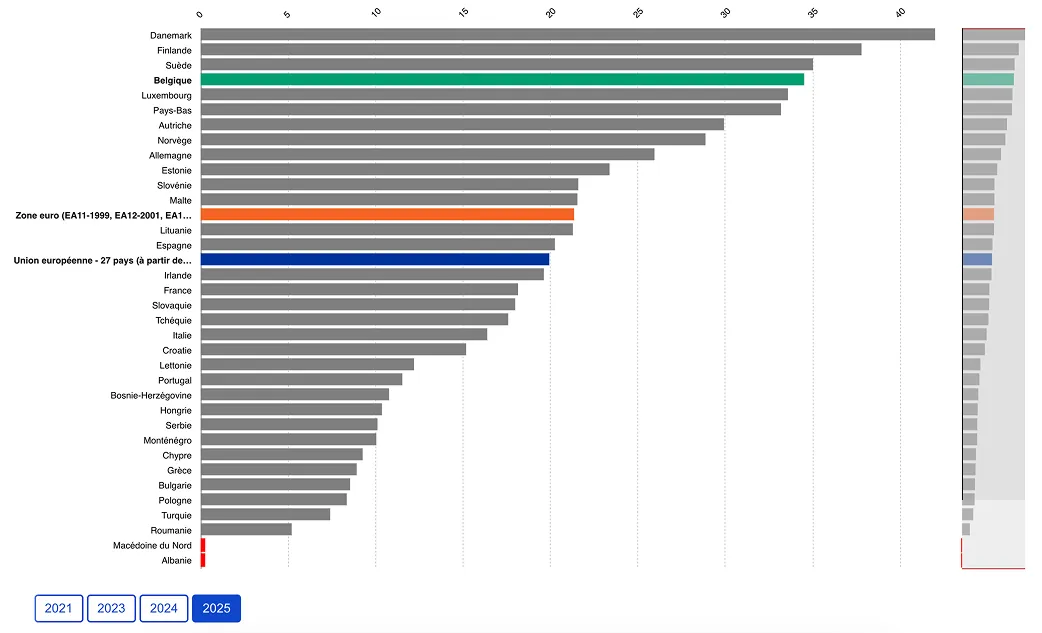
- Belgium ranks 4th in Europe for AI use in business at 34.54% of companies (10+ employees), behind Denmark (42.03%), Finland (37.82%), and Sweden (35.04%). The EU average is 19.95% (Eurostat, December 2025).
- A quarter (24%) of Belgian workers regularly use AI at work, an increase of 50% compared to 16% in 2024 (SD Worx, February 2025).
- 63% of Belgians use AI for professional, study, or personal purposes (KPMG, April 2025).
AI adoption by company size in Belgium
- In 2023, AI was present in 23% of medium-sized companies (+6 points in 2 years) (FPS Economy, 2023 data).
- Only 7.5% of Belgian micro-enterprises and 10.6% of small businesses use AI (FPS Economy, 2023 data).
- The pace of adoption is fastest in large companies (+18 points), followed by medium-sized (+13 points) and small (+10 points) companies (Acerta, February 2025).
Adoption by sector
- The services sector is the most advanced, with 27.4% of companies using AI (Acerta, February 2025).
- The manufacturing industry saw a 52% increase in AI use last year, and construction saw a 110% increase (Acerta, February 2025).
Frequency of use
- 15% of workers use generative AI tools daily, and 19% use them at least once a week (PwC Belgium, May 2025).
- Content creation (21%), communication personalisation, and task automation (17% each) are the main uses of AI at work (SD Worx, February 2025).
Adoption gap (gender, age, etc.)
- Men are more likely to use AI regularly at work (42%) than women (24%) (PwC Belgium, May 2025).
- Younger workers (under 34) use generative AI tools more regularly (49%) than those aged 35-54 (28%) and those over 55 (19%) (PwC Belgium, May 2025).
- Managers use AI more (37%) than executive or junior-level employees (18%) (SD Worx, February 2025).
- AI use is higher in the private sector (28%) than in the public sector (19%) (SD Worx, February 2025).
Awareness of AI tools
- ChatGPT is the most recognised generative AI tool in Belgium, cited by more than half of users (55%) (Deloitte, July 2024).
- Snapchat My AI (16%) and Microsoft Copilot (15%) are also commonly used (Deloitte, July 2024).
2. Trust and perception of AI
Trust levels
- Only 35% of Belgians are prepared to trust AI (KPMG, April 2025).
- 56% of Belgians accept or approve of the use of AI (KPMG, April 2025).
- Trust in the accuracy of AI outputs is lowest in Brussels (44%), compared to Wallonia (49%) and Flanders (51%) (Deloitte, July 2024).
- More than half (57%) of Belgian workers trust in their unique skills that cannot be replaced by AI (SD Worx, February 2025).
Perception of risks and benefits
- Belgians have mixed feelings about AI, being more worried than optimistic or excited (KPMG, April 2025).
- 39% of Belgians feel that the risks of AI outweigh the benefits, while 34% feel the benefits outweigh the risks (KPMG, April 2025).
- 84% of Belgians are concerned about the potential negative outcomes of AI (KPMG, April 2025).
- Main concerns include loss of human interaction (89%), cybersecurity risks (88%), and disinformation (88%) (KPMG, April 2025).
- 81% of Belgians nevertheless expect positive outcomes from AI (KPMG, April 2025).
Trust in organisations
- National universities and research institutes are the most trusted for developing and using AI (88% moderate to high trust), followed by healthcare institutions (80%) (KPMG, April 2025).
- More than 40% of Belgians have low trust in commercial organisations and large technology companies (KPMG, April 2025).
3. Impact of AI on employment and skills
Fear of job loss
- Nearly a quarter (23%) of companies expect to need fewer staff thanks to AI (Acerta, February 2025).
- Nearly a quarter (24%) of workers fear that AI will make a large part of their job obsolete (SD Worx, February 2025).
- Among regular AI users, more than half (53%) believe AI will profoundly change their work within three years (SD Worx, February 2025).
- Young workers are almost twice as worried about job loss due to AI as older groups (55% of 16-24 year-olds vs 19% of 45-54 year-olds) (Deloitte, July 2024).
Benefits for work
- More than three quarters (77%) of AI users believe the technology will make their work easier in the next two years (Deloitte, July 2024).
- Nearly three quarters (72%) believe AI will make their work more enjoyable and motivating (Deloitte, July 2024).
Skills and training
- 46% of Belgians report having limited knowledge of AI (KPMG, April 2025).
- Only 39% of Belgians have received AI training (KPMG, April 2025).
- 85% of Belgian employees who use AI have received training from their employer (Deloitte, July 2024).
4. AI regulation and policy
Company policy
- 40% of Belgian companies encourage the use of generative AI at work (Deloitte, July 2024).
- 29% of companies have no formal policy on AI use (Deloitte, July 2024).
- Nearly nine out of ten companies allow the use of AI, but seven out of ten workers feel that the guidelines are insufficient (Acerta, February 2025).
Regulation and governance
- 72% of Belgians believe that AI regulation is necessary (KPMG, April 2025).
- Only 34% of Belgians believe that current regulations are sufficient to ensure safe AI use (KPMG, April 2025).
- 90% of Belgians are unaware of the laws, regulations, or policies applicable to AI in Belgium (KPMG, April 2025).
- The European AI legislation (the “AI Act”), adopted in March 2024, came fully into force in 2025 (FPS Economy).
- 85% of Belgians want laws and actions to combat AI-generated disinformation (KPMG, April 2025).
5. Corporate investment in AI
- One third (31%) of Belgian companies had invested in AI at work by 2024, matching the European average (SD Worx, May 2024).
- The main areas of AI investment in HR are recruitment (automated CV screening, 13%), HR support (13%), and learning and development (12%) (SD Worx, February 2025).
- 24% of Belgian organisations already use AI in their payroll process (SD Worx, May 2024).
6. Global position
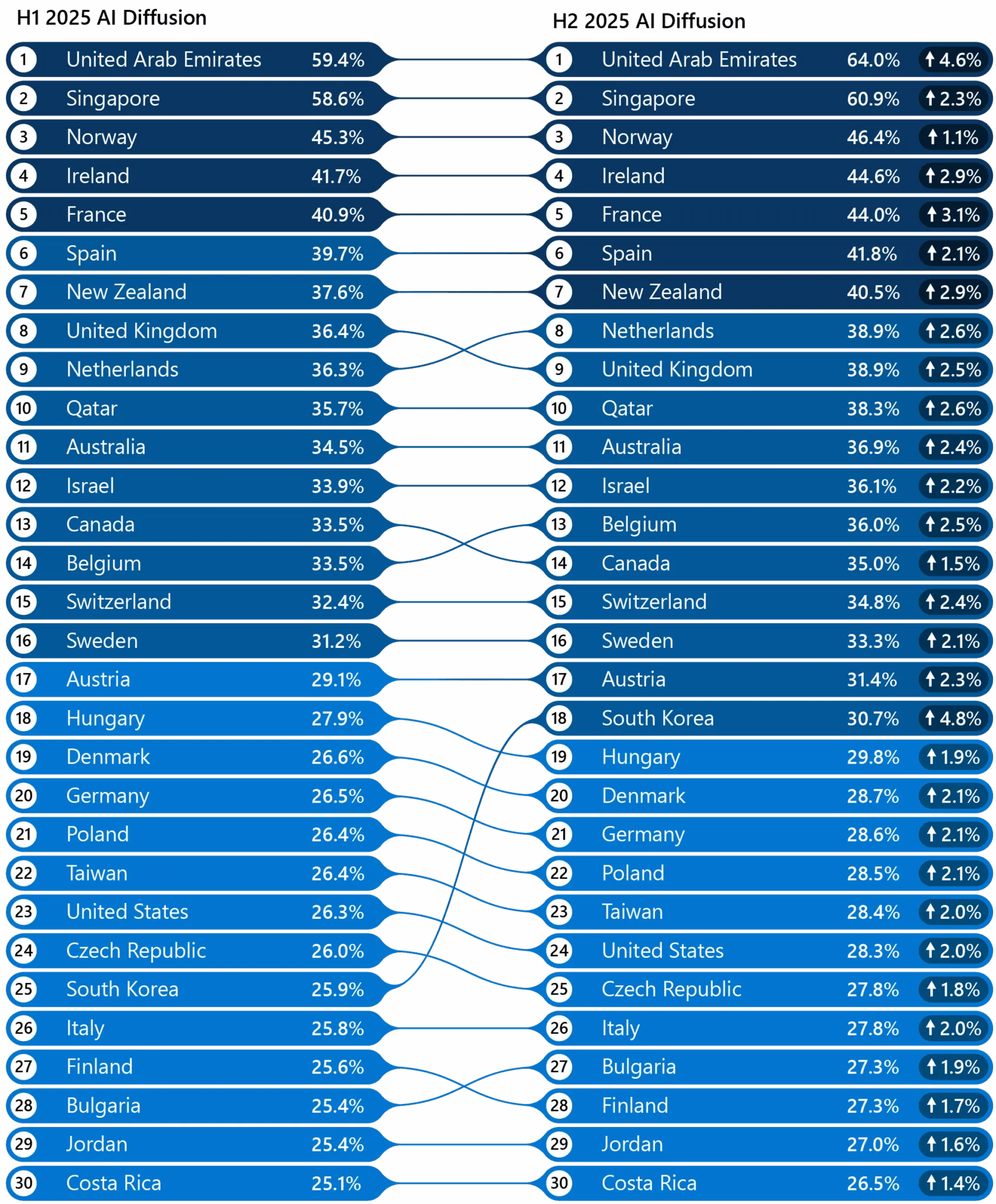
Belgium ranks 13th worldwide for generative AI adoption, with 36% of the population (aged 15-64) having used this technology in the second half of 2025. Belgium is ahead of Canada (35%) and well above the United States (28.3%) (Microsoft, January 2026).
According to Eurostat (December 2025), 42% of Belgians used generative AI tools in the past three months, a rate significantly above the European average of 32.7%.
Use of generative AI tools for private purposes in Belgium: 33.53 (top 1 is Norway at 47.27).
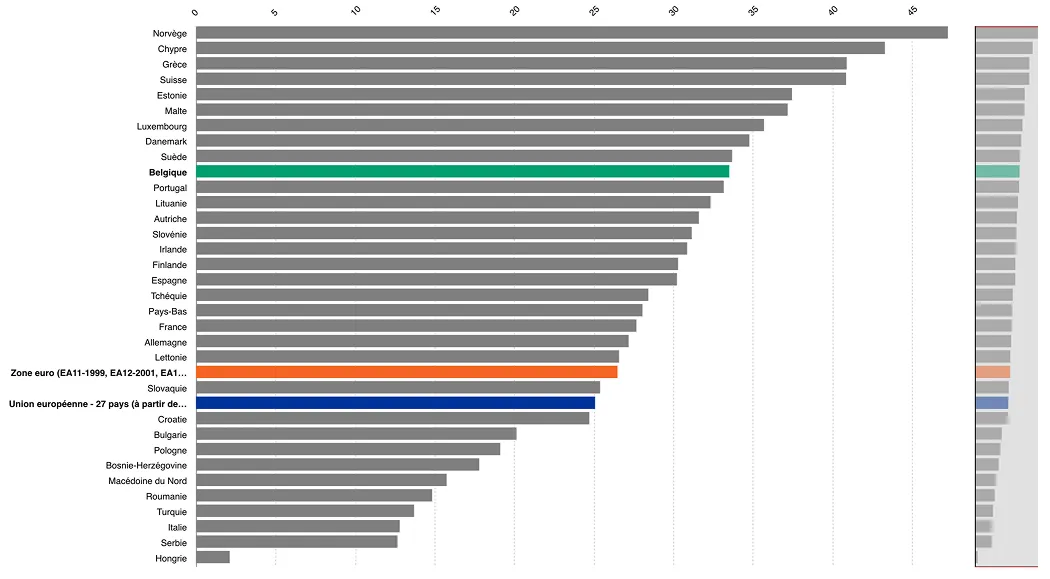
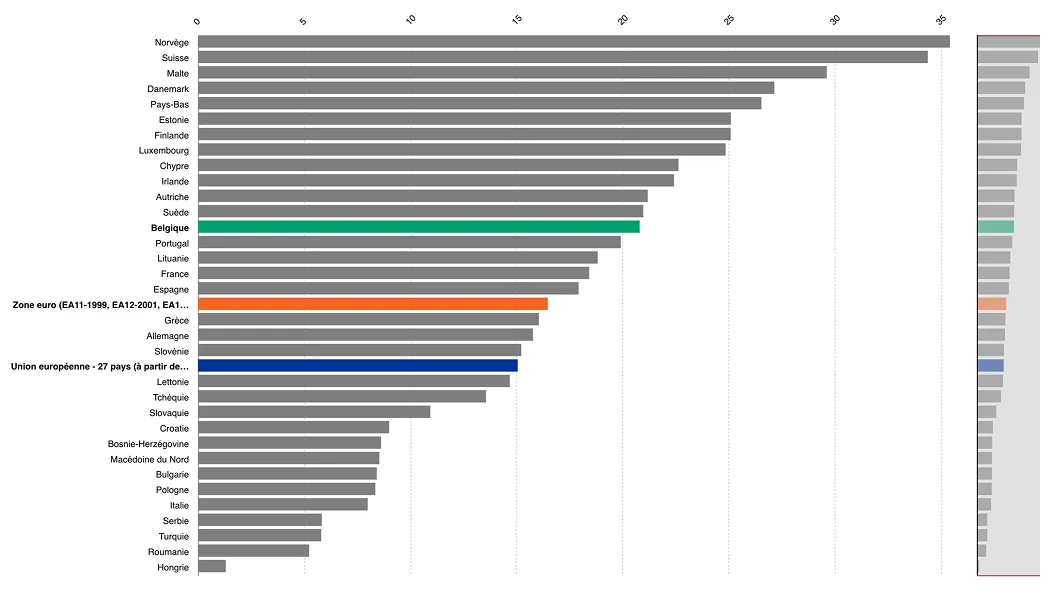
Use of generative AI tools for professional purposes in Belgium: 20.82 (top 1 is Norway at 35.44).
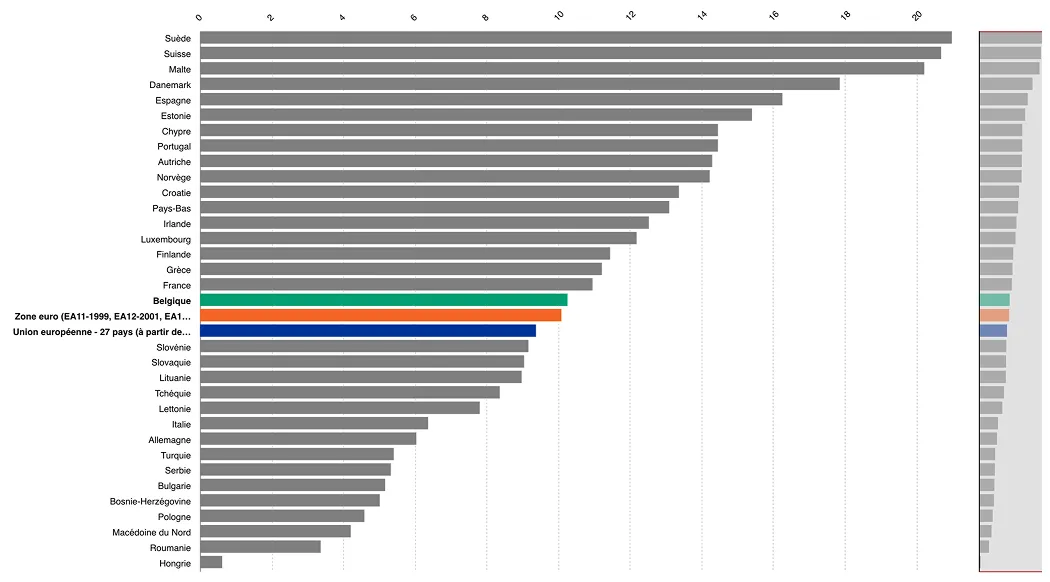
Use of generative AI tools for formal education in Belgium: 10.26 (top 1 is Sweden at 20.99).
Conclusion
The statistics show that Belgium is on track for AI adoption in Europe. However, significant challenges remain, particularly in digital literacy, building trust, proactive risk management, and the implementation of clear policies within companies.
To fully harness the potential of AI, it will be crucial to continue investing in training, raising awareness of best practices, and ensuring appropriate regulation that is well understood by all stakeholders.
