
Welcome to edition #07 of the Cercle IA newsletter. You are now 1,018 following it.
“I was afraid of missing the AI train. But seeing what it does, I wonder: what will be left for us to do?”
This confidence, heard this week during an AI coaching session with a SME leader, sums up a widely shared anxiety. The fear of gradually becoming redundant in the face of machines capable of searching, drafting, analysing and synthesising in a matter of seconds.
This fear is not new.
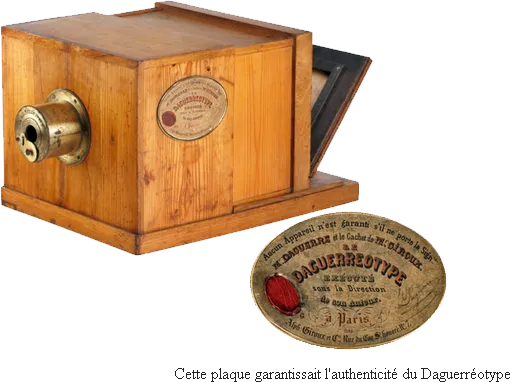
In 1839, when Louis Daguerre made photography accessible to the public, many painters saw it as the end of their craft. They were wrong.
Painting did not die. It transformed. Freed from the obligation to copy reality, it gave birth to Impressionism, and then to an explosion of artistic movements that profoundly redefined modern art.
We are living through a comparable moment today.
In this edition:
- 1839: when the machine threatened the artist
- The impressionist response: exploring what the machine could not capture
- 2026: your “impressionist frontier” in the face of AI
- The tool to test: JobsGPT, to map your skills against AI
Photography did not kill painting. It elevated it.
In 1839, Louis Daguerre revealed the daguerreotype to the world. The reaction attributed to French painter Paul Delaroche was immediate and famous: “From today, painting is dead.”
He was wrong. But his anxiety was legitimate.
Faced with this existential threat, artists had three options:
- Deny the reality and carry on as if nothing had happened
- Abandon their craft, which had become obsolete
- Reinvent themselves by exploring what photography could not do
It was the third path that Monet, Renoir, Degas and their peers chose.
What photography could not capture:
- Light and its movement: the changing reflections on water, the variations of a cathedral according to the time of day
- Subjective emotion: not what the eye sees, but what the heart feels
- The fleeting instant: capturing the impression of a moment, not its exact reproduction
- The materiality of gesture: the visible brushstroke, the physical trace of the artist
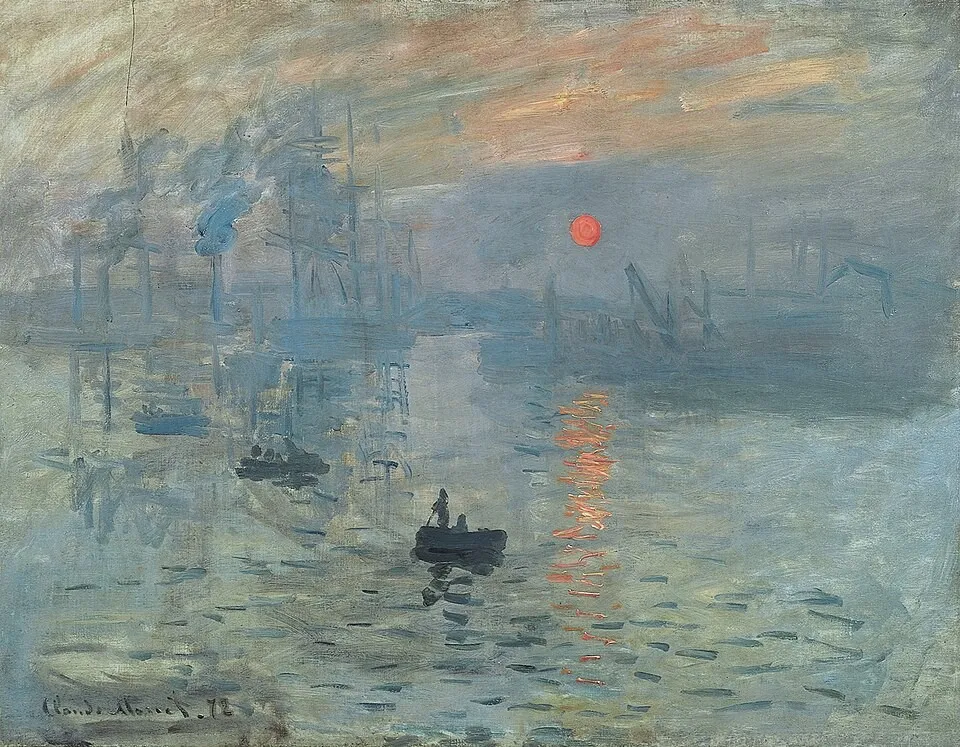
Impressionism was just the beginning of a creative explosion. Once freed from the obligation to “copy reality,” artists moved into territories that the photographer’s lens could not reach:
- Fauvism: paint the tree red if that is the emotion it evokes
- Expressionism: distort reality to project one’s fears or inner visions
- Cubism: Picasso and Braque deconstruct objects to show them from multiple angles simultaneously
The price of the transition
The first Impressionist exhibition in 1874 (35 years after the invention of the daguerreotype) was a resounding public failure. Monet lived in poverty for years. Cézanne was repeatedly rejected by the official Salon.
The transition period between the old paradigm and the new took between 40 and 50 years.
What is our “impressionist frontier”?
The same question arises today for knowledge workers in the face of AI.
A Microsoft Research study published in January 2025, covering 319 professionals, reveals that 75% of knowledge workers already use generative AI. The movement is under way.
What AI easily reproduces (the daguerreotype equivalent)
AI already excels at:
- Synthesising information: compiling data, summarising documents
- Producing standardised content: reports, emails, presentations following known formats
- Applying established frameworks: SWOT analyses, decision matrices, classic frameworks
- Automating repetitive tasks: transcription, translation, formatting
What remains (or becomes) human — our impressionism
But let us look at what AI still struggles to do:
- Contextual judgement: understanding the unspoken elements of a situation, sensing when the moment has come to act or to hold back. AI can analyse data. It cannot read the room at a tense board meeting.
- Strategic vision: identifying opportunities that no one else sees. Connecting weak signals to anticipate trends. Betting on an uncertain future.
- Relational intuition: understanding what truly motivates a client beyond what they say. Navigating team dynamics. Authentic empathy cannot be coded.
- Combinatorial creativity: taking two completely unrelated ideas and creating something radically new.
Why techno-pessimists are wrong (again)
There is a major difference between 1839 and 2022: speed. The Impressionists had 40 to 50 years to reinvent themselves. We have only 3 years of hindsight since ChatGPT.
This temporal compression creates legitimate discomfort. But the fundamental dynamic remains the same: technologies that automate mechanical reproduction free humans to explore what they do best.
Pessimists imagine a future where AI replaces humans. History points to a different scenario: AI will shake up our professions, without taking our place. It will force us to reinvent ourselves. Just as the painters reinvented themselves.
Study of the week: “Art and the science of generative AI” (MIT, Science, 2023)
Published in the prestigious journal Science in 2023, this MIT Media Lab study explores the parallel between photography, Impressionism and generative AI.
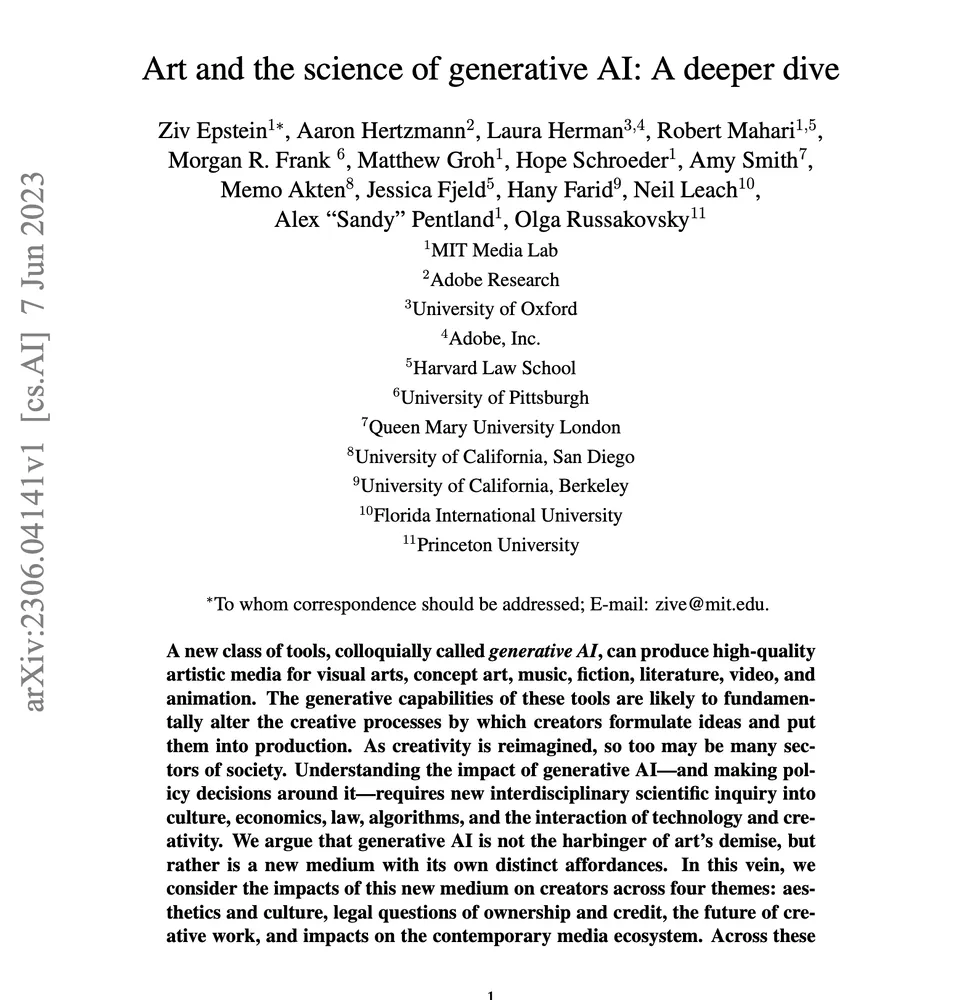
Their central thesis: generative AI is not “the announcement of the end of art”, but rather a new medium with its own distinct possibilities — exactly as photography was in 1839.
Aaron Hertzmann, researcher and co-author: “It seems likely, in fact, that photography was one of the primary catalysts of the modern art movement: its influence led to decades of vitality in the world of painting.”
The ultimate irony: while I explain that AI cannot truly grasp the essence of Impressionism, millions of users are asking Midjourney to generate images “in the style of Monet.” AI can imitate the style, but it misses the substance.
Humans create, machines reproduce.
The tool to test: JobsGPT by Cercle IA
After reading this newsletter, you are probably asking yourself: “Concretely, among my skills, which ones will be most impacted by AI?”
To give you answers, I created JobsGPT, a custom GPT accessible for free on ChatGPT.
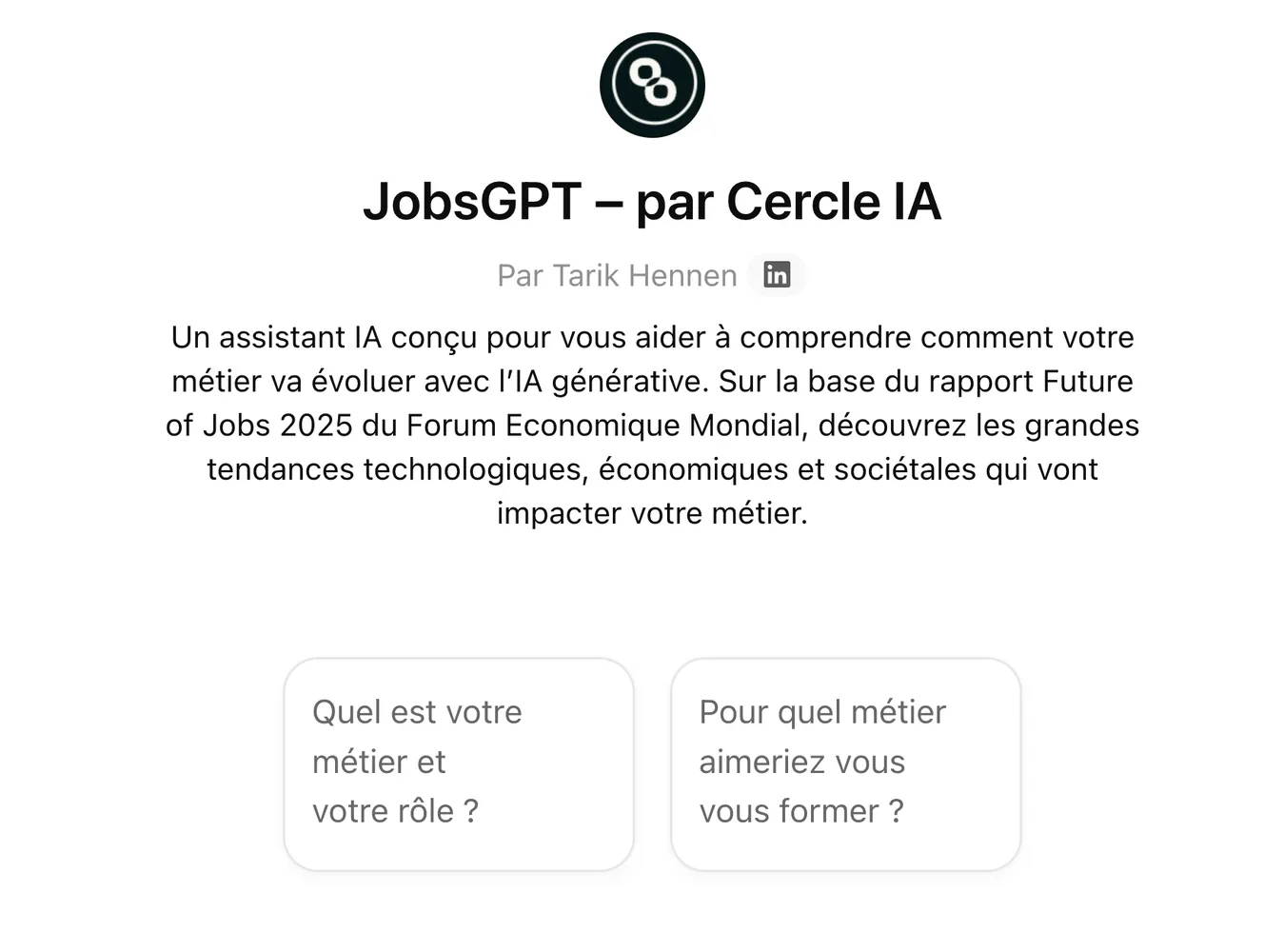
JobsGPT draws on the “Future of Jobs 2025” report from the World Economic Forum, which analyses the impact of generative AI on professions and skills up to 2030.
The process:
- You describe your job and your main activities
- JobsGPT identifies your key skills
- It reveals the major trends that will impact your profession
- You receive a diagnostic on skills to develop, skills that are automatable, and skills that are reinforced
Practical exercise — identify your “impressionist frontier”:
Take 10 minutes to answer these 3 questions:
-
When did you create the most value in the last 6 months? Think of a moment when someone told you “That was exactly what was needed.”
-
What do you “sense” that your tools do not pick up? What did you understand by reading between the lines of an email? What risk did you anticipate that the data was not yet showing?
-
If AI does 80% of your current work tomorrow, what will you do with your freed-up time? What complex problem will you tackle? What “impossible” idea will you explore?
These answers are your impressionist frontier. That is where you should be investing your energy right now.
The Impressionists who resisted photography disappeared. The Impressionists who embraced change and explored new frontiers entered history.
We are at exactly the same tipping point.
See you soon, and do not forget to put your new knowledge into practice.
