
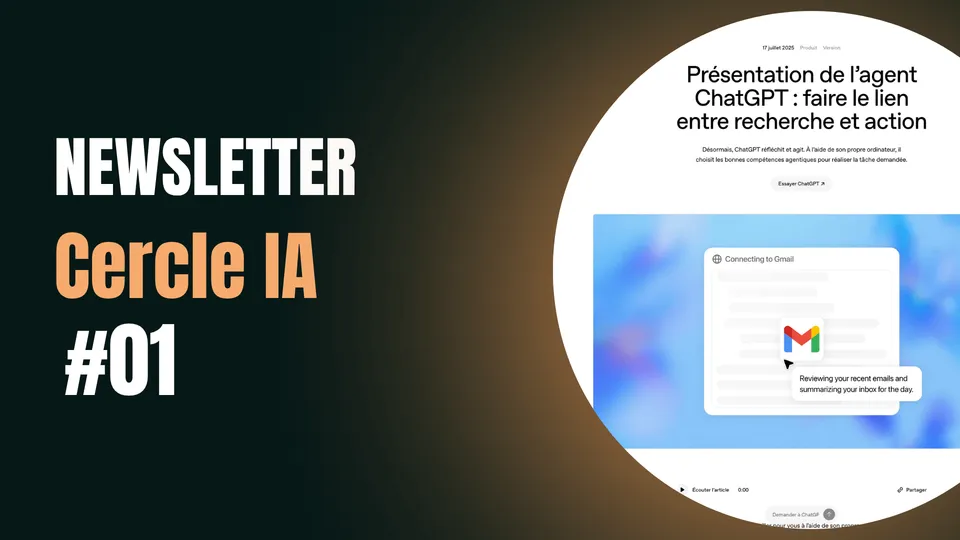
Welcome to the first edition of the Cercle IA newsletter.
This first edition in brief:
- ChatGPT steps outside its window and takes action: ChatGPT Agents can click, draft, analyse… on its own. A major announcement from OpenAI, though early press reviews are mixed.
- +43% more output for certain consultants using GPT-4. A landmark Harvard-BCG study measures the real impact of GPT-4 on the work quality of 758 BCG consultants (and reveals a trap to avoid);
- Our selection of AI books to read this summer to build the right foundations before the new season;
- The AI tool to test: Leexi, the Belgian (and European) AI notetaker.
Last Wednesday (16 July 2025), I gave a training session at Van Breda on the theme: “How to use AI as a personal assistant.” A structured programme, aligned with today’s tools.
The next day, OpenAI launched the ChatGPT agent.
Literally overnight, my training was out of date.
Not obsolete, but already behind.
My AI programme for the summer is therefore packed. This week, while everyone else seems to be on holiday, I am working on the Cercle IA summer schools that will take place just before the new term (one edition for consulting professionals and another for lawyers and legal practitioners).
I am also preparing to deliver a professionalisation seminar on the age of artificial intelligence at IHECS.
Yet one thing is undeniable: it is almost impossible to keep up with AI.
It is very difficult to follow the daily flood of new developments, to test them, and to step back far enough to distinguish the essential from the accessory from the trivial in the field of AI.
That is why it is crucial to know where you come from in the field of AI and, above all, to think about where you are going.
No single answer is sufficient. You need to project yourself at the personal, professional and societal level.
To stand a chance at this exercise, you need to develop general AI culture (or “AI literacy”). Books remain your best allies for that.
To contemplate the future, you need courage, imagination (or realism, depending on your point of view), and to choose your path right now.
The era when you could “wait and see” is over.
ChatGPT Agent: revolutionary productivity tool or web ghost?
On 17 July 2024, OpenAI announced the launch of the ChatGPT agent with a bold promise: ChatGPT no longer just thinks, it acts.
Equipped with its own virtual computer, ChatGPT can now manage complex tasks from start to finish by automatically choosing the right capabilities for each mission.
Concretely, according to OpenAI you can now ask ChatGPT to:
- “Look at my calendar and give me a briefing on the clients in my upcoming meetings based on the latest news”
- “Analyse three competitors and create a presentation”
ChatGPT browses the web, filters relevant information, guides you through secure connections when needed, executes code, performs its analyses and delivers finalised documents ready to use.
Presented as a revolution, the ChatGPT agent relies on an agentic system that merges three OpenAI technologies: (i) Operator, for interactions with websites, (ii) deep research, for information research and synthesis, and (iii) ChatGPT’s conversational intelligence.
But the ChatGPT agent is not yet available in Europe (or Switzerland). Europe gets access to the latest features with a delay. We therefore need to project forward, to anticipate these changes while our competitors or peers on other continents can build a head start.
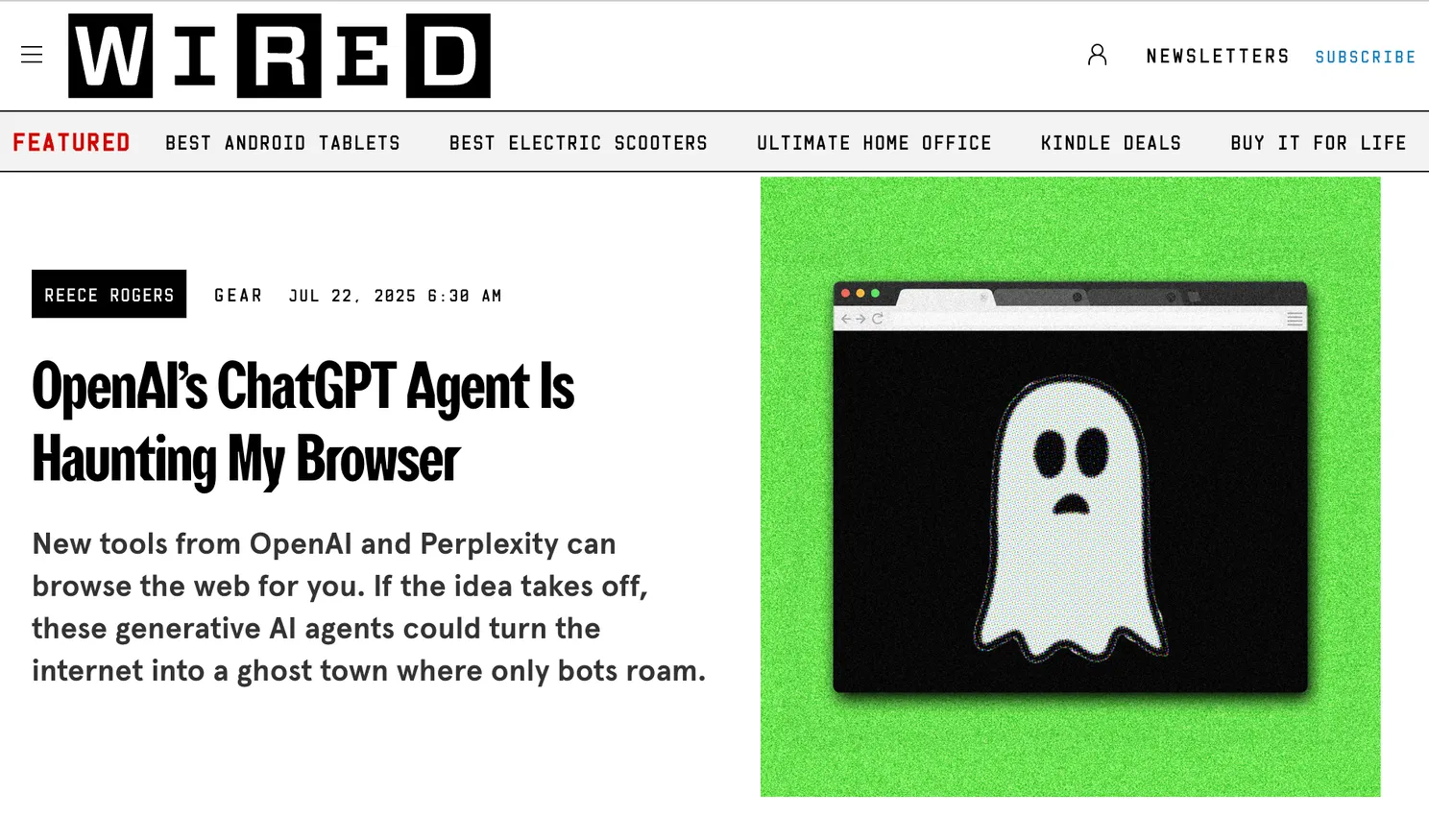
“OpenAI’s ChatGPT Agent Is Haunting My Browser” – Wired: WIRED describes a strangely unsettling experience with multiple ChatGPT agents acting simultaneously in the browser, clumsily reproducing human behaviours (phantom clicks, involuntary site visits) while raising questions about their reliability and advertising impact.
“My 8 ChatGPT Agent tests produced only 1 near-perfect result – and a lot of alternative facts” – The Verge: After testing ChatGPT Agent on 8 concrete projects, the author concludes that the tool fails to deliver reliable results in the majority of cases — hallucinations, slowness, wrong links — with only one truly conclusive test out of eight.
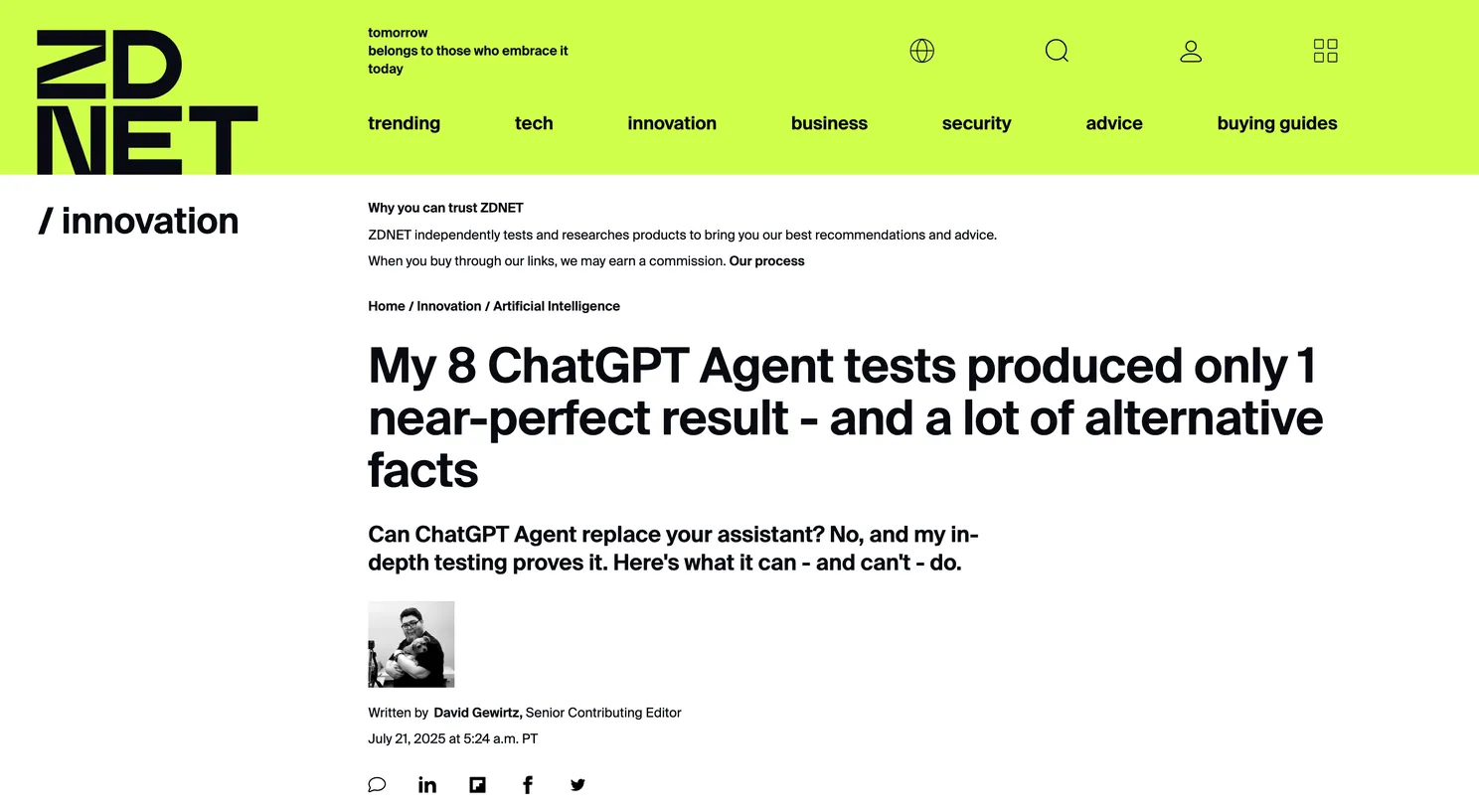
Verdict: too unstable to justify the $200/month… unless you enjoy experimenting.
Our selection of AI books to read as a priority in 2025
This summer, dive into the heart of artificial intelligence through a few carefully selected books to help you anticipate its impacts and act with confidence.
Co-intelligence: Living and working with AI – Ethan Mollick

Published in April 2024, this book may seem almost “old” but remains a classic whose lessons hold up against the rapid evolution of AI (and the author’s enthusiasm is contagious).
Ethan Mollick is a professor at Wharton and author of the hugely popular newsletter One Useful Thing. In Co-intelligence, he offers a clear-headed and pragmatic approach to collaboration between humans and artificial intelligence — a “co-intelligence” that combines the strengths of both worlds.
Brave New Words: How AI will revolutionise education – Salman Khan

The future depends on the quality of education. As we approach the 3rd academic year since the launch of ChatGPT, it is more than time to reflect and rethink the ways of teaching in the AI era.
A manifesto for the school of the future where generative AI is a catalyst for transforming education for children and their parents alike.
HBR Guide to Generative AI for Managers – Elisa Farri & Gabriele Rosani
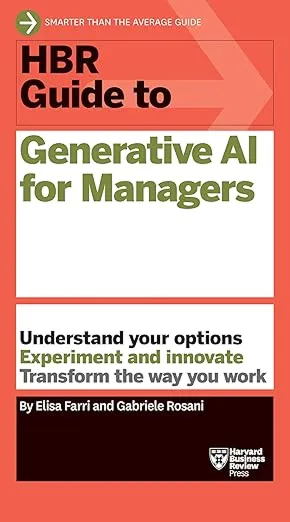
AI can feel like uncharted territory to explore. Better to venture in with a plan, or even a survival guide. With this ultra-actionable guide, you will never be alone on the AI planet.
Practical cases and concrete strategies for integrating generative AI into your role as a manager.
Hello ChatGPT: How AI is changing our relationships – Louis de Diesbach
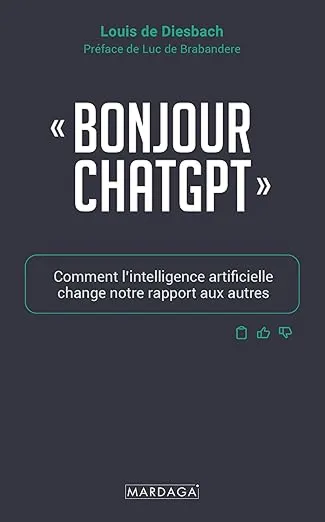
How to harness the potential of AI while keeping a critical mind and ensuring that authentic human values and interactions are preserved.
In Hello ChatGPT, Louis de Diesbach explores our potentially dangerous liaisons with conversational AIs onto which it is so easy to project human characteristics.
Harvard-Wharton study: 758 BCG consultants to test the real performance of AI in consulting
Researchers conducted a real-world experiment with 758 consultants from the Boston Consulting Group (7% of staff). The goal: to measure the real impact of GPT-4 on the productivity and work quality of consulting professionals.
Three groups were formed: consultants without AI, consultants with access to GPT-4, and consultants with GPT-4 + prompt engineering training.
The impressive results
- Increased productivity: +12.2% more tasks completed / +25.1% faster execution
- Higher quality: +40% quality as judged by external experts
- Levelling the playing field: “weaker” consultants improved by +43%, “stronger” ones by +17%
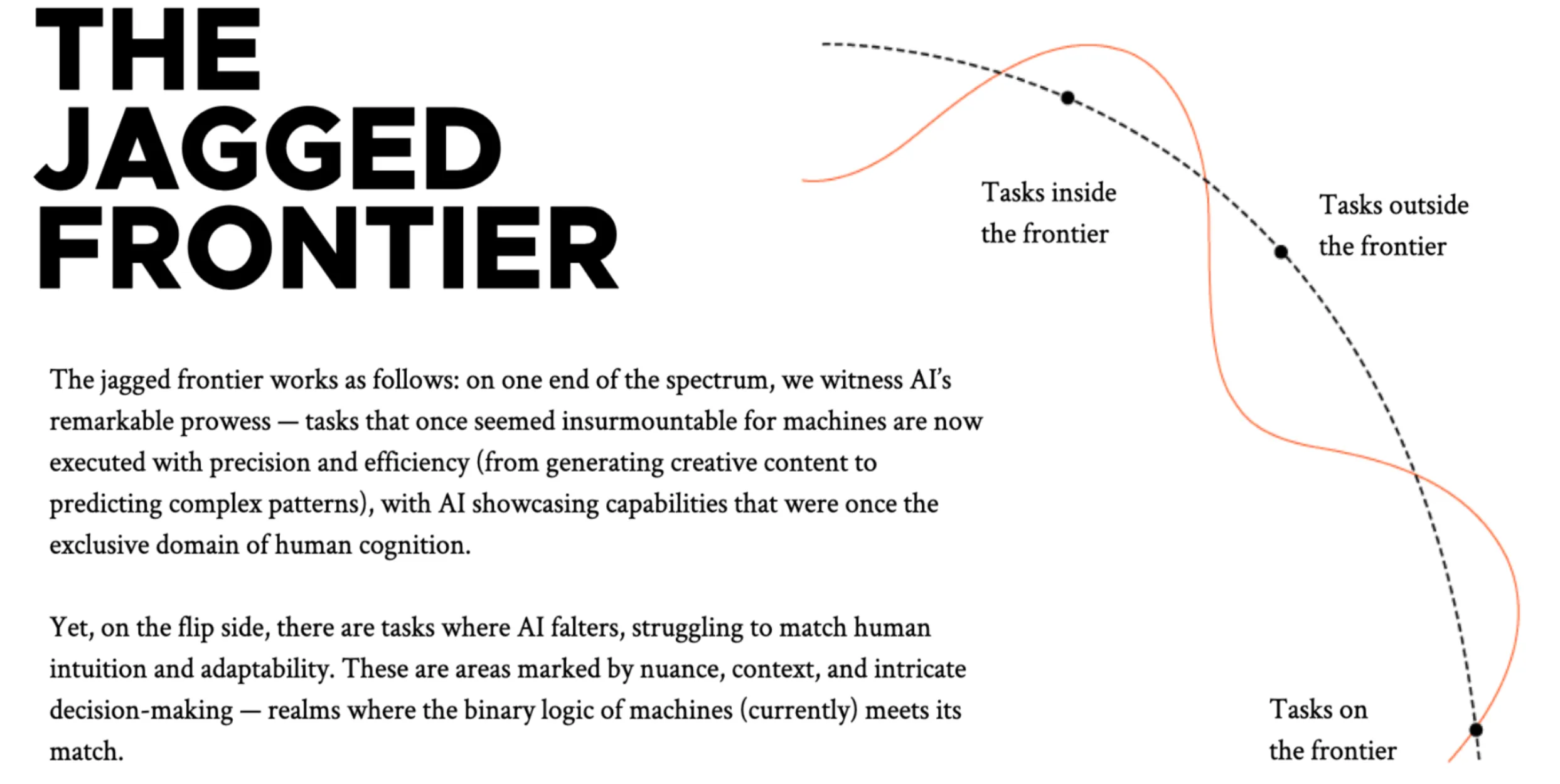
The fall beyond the “jagged” technology frontier
But beware: the study also reveals the limits. When a task goes beyond the AI’s capabilities, performance drops dramatically. Consultants using AI become 19 percentage points less likely to produce a correct solution.
Why this study matters
- AI is not optional: the productivity and quality gains are too significant to ignore.
- All consultant levels benefit: AI “elevates” the less experienced and allows the best to go even further.
- Training is indispensable: knowing how to use AI cannot be improvised.
- You need to understand the shifting limits of AI capabilities.
The tool to test: Leexi
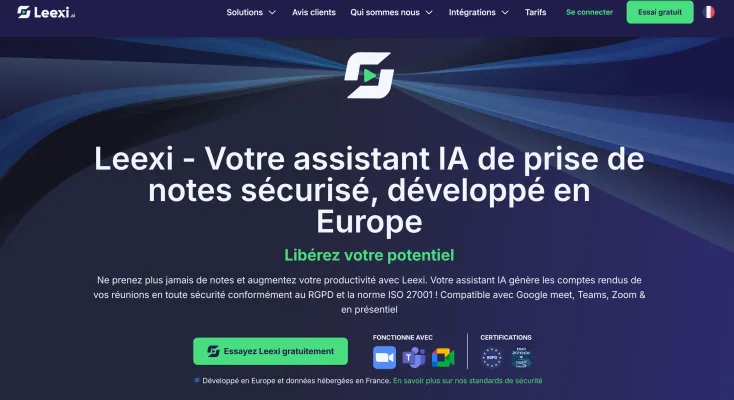
Leexi is an AI assistant software for professional meetings, specialising in automated note-taking, transcription, synthesis and analysis of meetings and professional calls.
Founded in 2022 in Brussels, Leexi is a 100% family-owned startup, ISO 27001 certified and GDPR compliant, capable of automating the capture and summary of exchanges in more than 120 languages, with hosting exclusively in Europe.
Why you should test Leexi:
- Real-time contextual capture so you never miss an exchange.
- Automatic extraction of decisions, open questions and tasks to assign.
- Instant distribution of summaries to your collaborative tools for smooth follow-up.
- Measurable impact on your team’s productivity and responsiveness.
This newsletter may contain affiliate links to tools that I personally test and endorse. Your purchases via these links help support the editorial work (more than a day per newsletter) at no extra cost to you.
